Your donation will help fund awareness initiatives, support groups, and medically necessary compression garments for those who cannot obtain them due to financial hardship or limited insurance coverage.

The Lymphatic System
The lymphatic system is a vital network that helps maintain the body’s lymphatic fluid balance, support immune function, and protect against infection. Lymph is a clear, protein-rich fluid containing immune cells, cellular waste, and excess fluid collected from the tissues. The lymphatic system transports lymph through a body-wide network of vessels and lymph nodes. When this system is impaired, lymph may accumulate in the tissues, causing swelling.
Lymph Nodes
-
Small, bean-shaped structures located in clusters throughout the body, including:
-
Cervical lymph nodes – neck
-
Axillary lymph nodes – armpits
-
Mediastinal lymph nodes – chest between the lungs
-
Mesenteric lymph nodes – abdomen near the intestines
-
Inguinal lymph nodes – groin
-
-
Act as filters and immune checkpoints, cleaning lymph as it travels through the lymphatic system.
-
Contain immune cells that identify and help fight bacteria, viruses, abnormal cells, and other harmful substances.
-
Help regulate lymph flow by directing lymph through the lymphatic network.
-
Damage, removal, or blockage of lymph nodes can disrupt lymph transport and increase the risk of Lymphedema.
Lymphatic Capillaries
-
Smallest vessels of the lymphatic system that are found throughout the body’s tissues.
-
Collect excess fluid that leaves the blood vessels and enters surrounding tissues. This fluid, called lymph, contains proteins, cellular waste, and immune cells.
-
Transport lymph into larger lymphatic vessels, which move it toward the bloodstream.
-
Help prevent fluid buildup in tissues. When these vessels are damaged or unable to function properly, lymph may accumulate and contribute to Lymphedema.
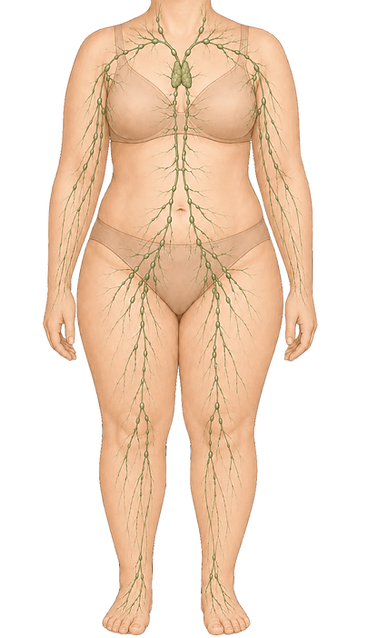
The lymphatic system relies on a continuous flow of lymph through its vessels. Unlike the heart, the lymphatic system does not have a central pump. Instead, lymph movement is supported by muscle activity, breathing, body movement, and pressure changes within the vessels. When lymphatic pathways are damaged, blocked, or overwhelmed, lymph can build up in tissues, leading to swelling known as Lymphedema.
Understanding the lymphatic system helps explain why early recognition and management of lymphatic disorders are so important. Treatments such as compression therapy, manual lymphatic drainage, exercise, and skin care support the body’s ability to move and manage lymph fluid.